For SaaS teams · Five tasks at once
The sprint is planned. The screens are not.
Recast works as the product design team for SaaS companies whose engineers are ahead of the designs. For $3,900 a month you file unlimited tasks, five are worked at once, and first concepts come back in 48 hours, every day of the week. Each flow is delivered as developer-ready Figma with every state drawn and the design system kept up to date, and front-end build in React or Next.js is included.
Checked · by Daniel Makhamreh, lead designer at Recast
- Price
- $3,900 a month, billed monthly. No annual contract, no tiers.
- Capacity
- Unlimited tasks; five worked in parallel, the rest queued in your order.
- Speed
- First concepts in 48 hours, seven days a week.
- Handoff
- Developer-ready Figma: components, tokens and spec frames.
- System
- Your design system built and maintained as the product grows.
- Contact
- One lead designer on every call, accountable for every design choice.
- Try it
- $490 one-week pilot, up to three tasks, credited against month one.
The work
What does a SaaS team hand to a design subscription?
The screens the roadmap already names and nobody has drawn. In most SaaS companies engineering capacity runs ahead of design, so features are built from a ticket and a sketch, and the interface is decided in code review.
You file each of those as a task. Five are worked at the same time and the rest wait in the order you set.
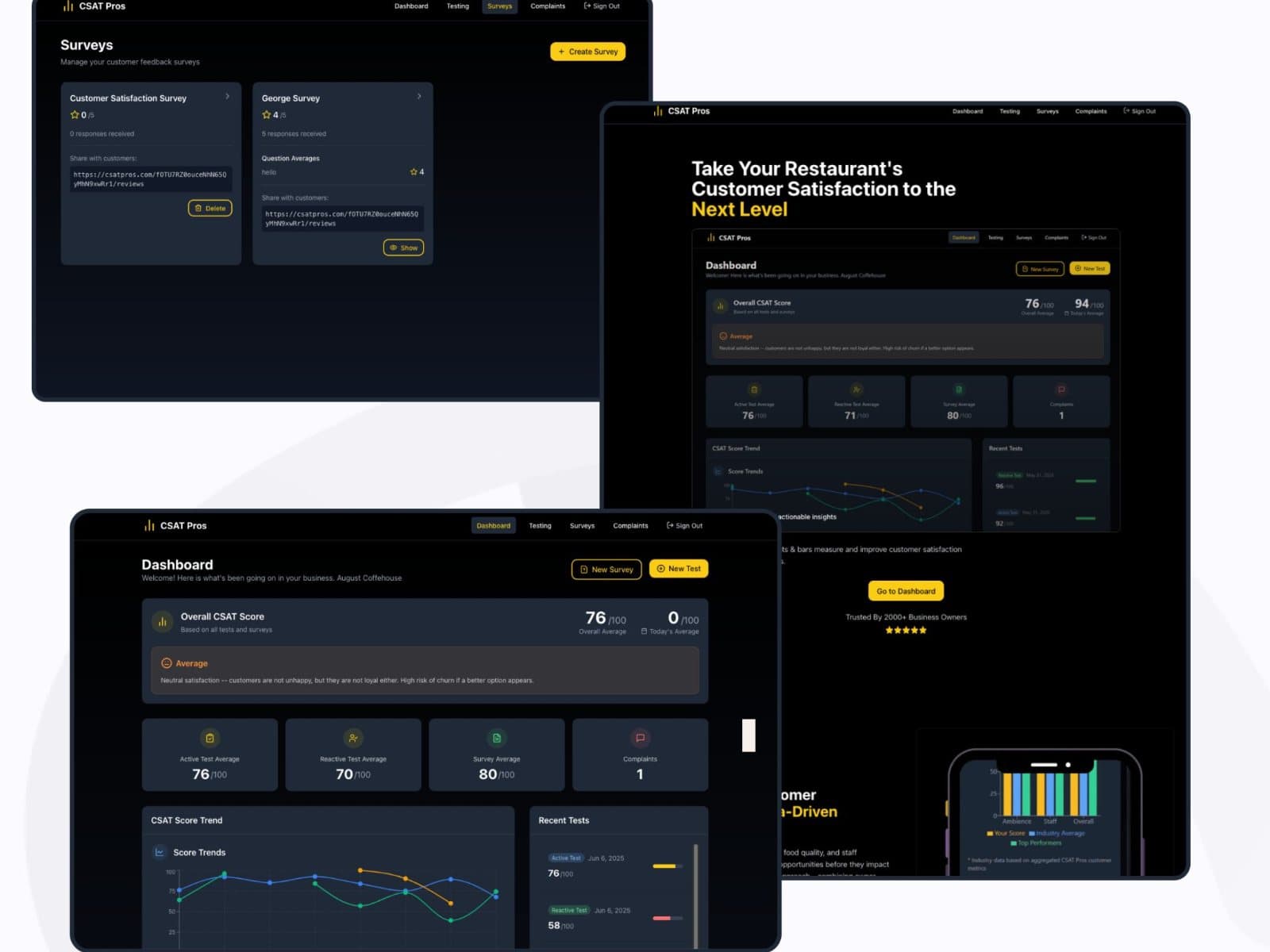
Dashboards and tables
The screen your customers open every day: what sits at the top, how a table sorts, filters and paginates, and what a chart says with one data point.
Onboarding
From sign-up to the first useful moment: the invitation email, the empty workspace, the first import, the checklist that goes away.
Settings, roles and billing
The pages nobody wants to design: permissions, team members, plans, invoices, the downgrade and the cancelled account.
Empty, loading and error states
Every list with nothing in it, every slow request, every action that fails, written and drawn, not left to a default.
The first month
What does a first month of five parallel tasks look like?
Five flows move at once, and first concepts on each come back in 48 hours, any day of the week. A flow filed on Thursday is in front of you on Saturday.
The table shows how a product team might spend the five slots in its first month. It is an illustration, not a schedule: you set the order, and when one task is approved the next in your queue takes its place.
| What is compared | What is filed | What comes back |
|---|---|---|
| Slot one | The feature engineering starts next sprint | The flow with every state, as components and a spec frame |
| Slot two | Onboarding, from sign-up to first value | The flow redrawn screen by screen, with its empty states |
| Slot three | A design system audit | Tokens and components reconciled with what is in the code |
| Slot four | Settings, roles and billing | The pages and their edge cases: downgrade, failed payment, removed member |
| Slot five | The states nobody drew | Empty, loading, error and no-permission states for screens already live |
Slot one
- What is filed
- The feature engineering starts next sprint
- What comes back
- The flow with every state, as components and a spec frame
Slot two
- What is filed
- Onboarding, from sign-up to first value
- What comes back
- The flow redrawn screen by screen, with its empty states
Slot three
- What is filed
- A design system audit
- What comes back
- Tokens and components reconciled with what is in the code
Slot four
- What is filed
- Settings, roles and billing
- What comes back
- The pages and their edge cases: downgrade, failed payment, removed member
Slot five
- What is filed
- The states nobody drew
- What comes back
- Empty, loading, error and no-permission states for screens already live
An example of how the slots are used. Unlimited revisions apply to every task.
The system
How do you stop a design system drifting from the product?
By making the system the place every new screen is drawn from, and by changing the system when a screen needs something new. Drift starts when a feature file invents a one-off: a fourth button size, a new grey, a modal with its own padding.
The plan includes a design system that is built and maintained, not handed over once. In practice that is four habits.
Tokens before screens
Colour, type, spacing and radius exist as named tokens, and screens use the names, so a change is made in one place.
One source per component
A component lives in the library with its variants. Feature files use instances of it and do not redraw it.
States belong to the component
Hover, focus, disabled, loading and error are part of the component, so engineers build them once.
New parts go back in
When a flow needs something the system lacks, it is added to the library as part of the same task.
The handoff
What do engineers get at handoff?
A Figma file they can build from without a meeting: components, tokens and spec frames. The test is whether an engineer who was not on the call can open the file and know what happens when the request fails.
Dense screens are where this matters. A data table tempts small grey text, and WCAG 2.2 level AA asks for a contrast ratio of at least 4.5 to 1 for text, so the token for secondary text is chosen against that number, not by eye.
If you would rather not build it yourselves, front-end build hours are included: the same team builds the screens in React or Next.js from the file it designed.
Spec frames
Beside each screen: spacing, behaviour, the rule for truncation, what is clickable and where it goes.
Every state
Default, hover, focus, disabled, loading, empty, error and no-permission, drawn for each view.
Tokens
Named so that they map to the variables in your code.
The honest answer
When should a SaaS company hire a designer instead?
When design is a full-time seat inside the team, not a queue of screens. The subscription makes screens, systems and front ends quickly. It does not replace someone who sits in discovery every day.
The two also work together: a designer in-house for direction and research, and the plan as the capacity behind them. There is no annual contract, so the plan can stop when the hire is made.
Continuous discovery
If you interview customers every week and want a designer in each conversation, that is an employee.
A domain that takes months to learn
Clinical, financial or industrial products, where the rules are the product, reward someone who stays for years.
Someone in the room
If your team works from one office and decisions happen at a whiteboard, hire for that.
Questions
Asked before the call.
Can you work inside our existing Figma library?
- Yes. Give the team access to your library and it designs with your components and tokens, adding to the library when a flow needs something new. If there is no library, building one is part of the plan.
How do tasks fit around our sprints?
- File the next sprint's flows as tasks a sprint ahead. Five are worked at once, first concepts come back in 48 hours and revisions are unlimited, so the designs can be settled before the sprint that builds them. You set the order of the queue.
We already have a designer. Does the plan still make sense?
- It works as capacity beside them. Your designer keeps direction, research and the decisions that need context; the queue takes the screens, states and system work that would otherwise wait.
Our product is in React. Can you build the screens as well as design them?
- Yes. Front-end build hours are included in the plan, in React or Next.js, by the same team from the file it designed. If your engineers build, they get components, tokens and spec frames instead.
Do you test a SaaS flow with users before we build it?
- On request. A usability test is five users on the flow, with a written recommendation at the end.
What happens to the files if we cancel?
- They are yours. You own everything on delivery, whether you stay a month or a year, and cancelling takes one click. If you only need a break, pause instead and the unused days are banked.
Sources
Other companies change their prices and terms. If something here is out of date, write to hello@recastux.com and we correct it.
Twenty minutes. Your product on the screen.
The pilot call is with the lead designer who would run your work. Show the screens that bother you most, pick up to 3 tasks for a one-week pilot, and leave knowing the price and the scope. The call is free; the pilot is $490 once, credited against your first month.